
Sub-Total: $0.00
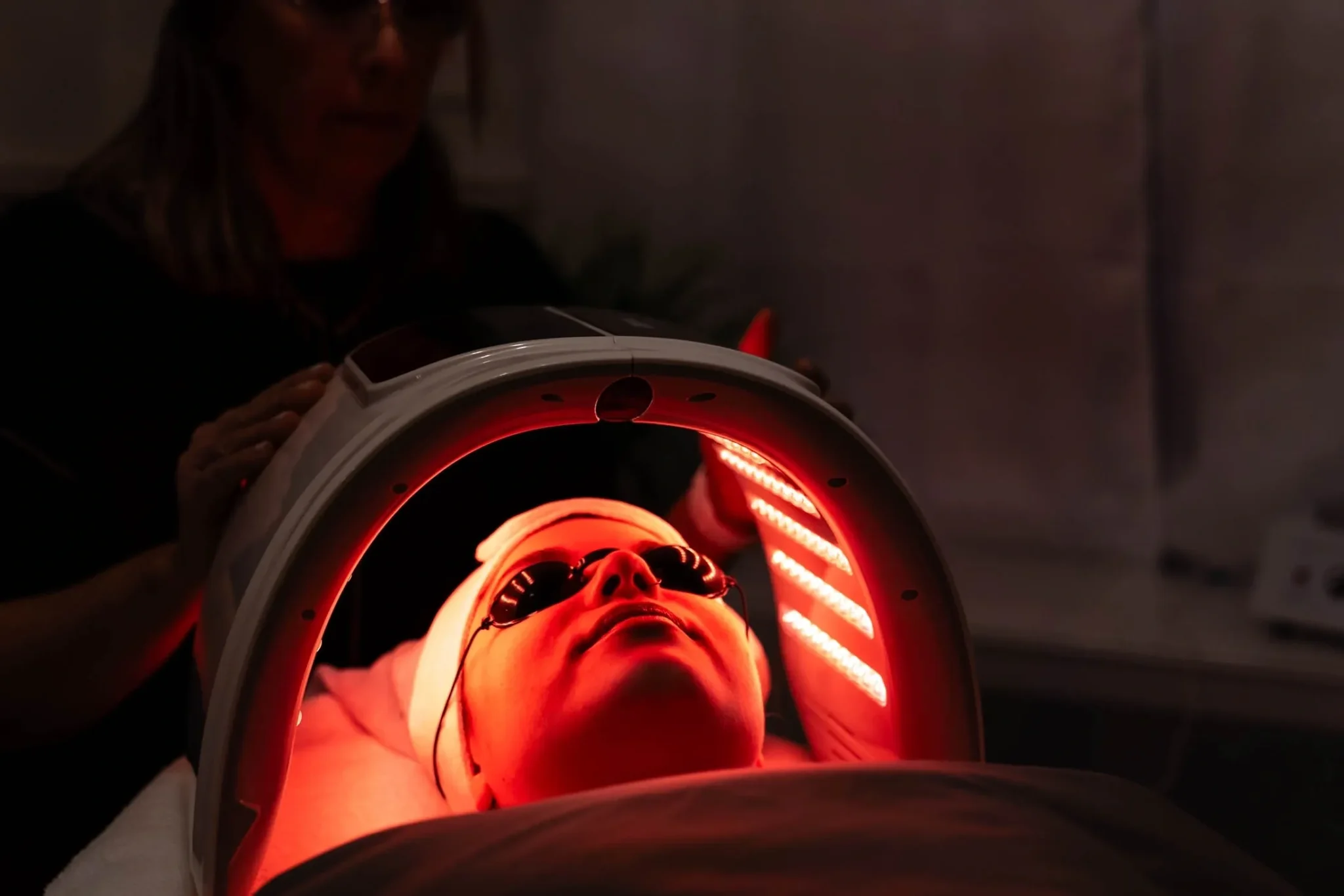
The LED Mask Lie: What the Beauty Industry Isn’t Telling You
Last Update 08/12/2026
Table of Contents
An LED mask only works if it delivers the right wavelengths at enough power, and most consumer masks publish neither number. Clinically useful red light sits between 630 and 660 nanometers, blue between roughly 415 and 470, and near infrared between 800 and 850. A mask described only as “red light” or “7 colors” is telling you nothing measurable.
Quick Answer
Clinically useful LED wavelengths are 630 to 660 nanometers for collagen, 415 to 470 for acne bacteria, and 800 to 850 for deeper repair. Irradiance should be at least 30 mW/cm², with a target dose of roughly 5 to 9 J/cm² per session.
Use the checklist below to read a spec sheet before you buy. Each section covers one number that separates a real device from expensive mood lighting.
Precise Wavelengths, Not Just Colors
This is the biggest one. A legitimate mask will list exact nanometers (nm), not just “red light” or “blue light.” If you want the wider consumer view of which devices are worth buying, see our guide to LED face masks and why most don’t work.
Clinically effective ranges:
- Red: 630–660 nm → collagen + anti-aging
- Blue: ~415–470 nm → acne bacteria
- Near Infrared: 800–850 nm → deeper repair + inflammation
Irradiance and Power Output
This is what most cheap masks fail on.
- Minimum effective: 30 mW/cm²
- Ideal range: 30–50+ mW/cm²
- Weak/useless: under 20 mW/cm²
No irradiance listed is almost always a sign of a weak device.
Energy Dose in Joules
This is how much light your skin actually receives.
- Target: ~5–9 J/cm² per session
Without enough dose, even correct wavelengths will not do anything.
LED Count and Coverage
- Look for: 100–300+ LEDs minimum
- Even spacing = no “dead zones”
Cheap masks often have:
- few LEDs
- uneven placement
- weak diffusion
FDA Clearance vs Marketing Language
Key distinction:
- FDA-cleared (510k) = meets safety + performance standards
- “FDA approved materials” = marketing fluff
Clearance is a specific regulatory process, and the FDA explains what a 510(k) premarket notification actually requires. Real brands will clearly state:
- “FDA-cleared device”
- clinical testing or studies
Clinically Relevant Modes
Not rainbow gimmicks, but actual useful combinations:
- Red + NIR → anti-aging
- Blue → acne
- Combination modes → inflammation + repair
Green, purple, and similar extras are often marketing additions with weak evidence.
Mask Design and Skin Contact
- Flexible silicone > hard plastic
- Close skin contact = better light penetration
- Full face coverage
Even good specs fail if the mask sits too far off the skin.
Why Professional Treatments Outperform At-Home Masks
Even good at-home masks are:
- lower power than professional panels
- designed for maintenance, not transformation
That is why:
- You will see results, but slower (8–12 weeks typical)
- Clinic devices outperform due to higher irradiance
If you would rather skip the spec sheet entirely, our specialty skin treatments in Bend use professional-grade equipment at power levels no consumer mask reaches.
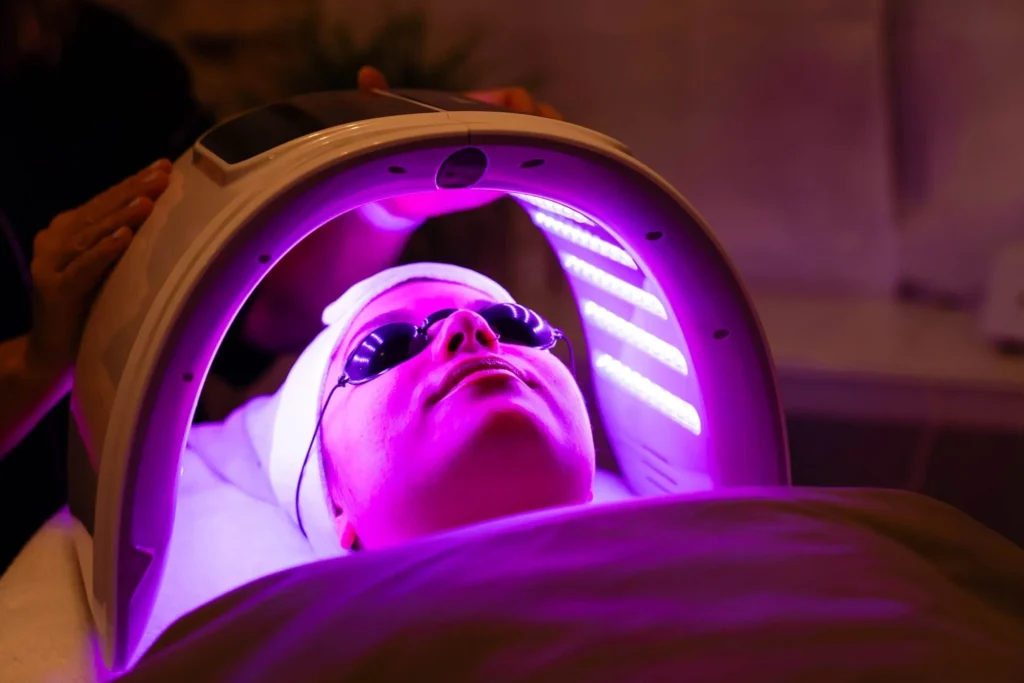
Specifications only take you so far. For the consumer view of which devices are worth buying, see our guide to what a professional facial actually does, and our notes on facials for acne and sensitive skin if breakouts are your reason for considering LED.
Frequently Asked Questions
What wavelength is best for collagen?
The wavelength best for collagen sits between 630 and 660 nanometers, in the red part of the spectrum. Near infrared between 800 and 850 nanometers reaches deeper and supports repair and inflammation rather than surface tone. Blue light around 415 to 470 nanometers targets acne bacteria and does nothing for collagen. A mask that lists colors instead of nanometer figures gives you no way to check which of these it delivers.
What irradiance does an LED mask need?
An LED mask needs at least 30 mW/cm² of irradiance to do meaningful work, with 30 to 50 or higher being the useful range. Anything under 20 mW/cm² is too weak to produce a measurable change no matter how long you wear it. Irradiance is the specification cheap devices leave off their packaging most often. If a brand does not publish the figure anywhere, treat that silence as an answer.
What does FDA cleared mean for an LED mask?
FDA cleared means the device passed a 510(k) premarket notification, showing it is substantially equivalent to an already legal device on safety and performance. It is a specific regulatory step, and a brand that has completed it will say “FDA-cleared device” plainly. Phrases such as “FDA approved materials” or “FDA registered facility” are marketing language and carry no equivalent weight. Look for the clearance claim, not a nearby word.
How long until LED light therapy shows results?
LED light therapy typically shows visible results in 8 to 12 weeks with consistent use at home, assuming the device actually meets wavelength and irradiance thresholds. Professional panels reach higher irradiance, so in-clinic courses generally show change sooner. Results build gradually rather than appearing after one session. If a device promises transformation within days, that claim is not consistent with how the underlying process works.